Official PS2 BIOS Setup & Download Emulator Guide for PCSX2, AetherSX2 & More (Safe & Legal)
Get the verified PS2 BIOS setup guide for all major emulators including PCSX2 and AetherSX2. Learn how to install and configure BIOS files safely — 100% working, region-free, and trusted by gamers for smooth PlayStation 2 gameplay on Windows, macOS, Linux, and Android.
Download NowPS2 BIOS File Details
At PS2 BIOS, you can follow a safe and legal setup guide for the original PlayStation 2 BIOS. This comprehensive walkthrough helps you configure emulators such as PCSX2 and AetherSX2 with ease for optimal gaming performance.
Our beginner-friendly instructions make setup simple, improving graphics and ensuring smooth PlayStation 2 gameplay without risk or confusion. Everything you need is packed into this official PS2 BIOS setup guide — tested, trusted, and safe.
What Is PS2 BIOS and Why It Matters?
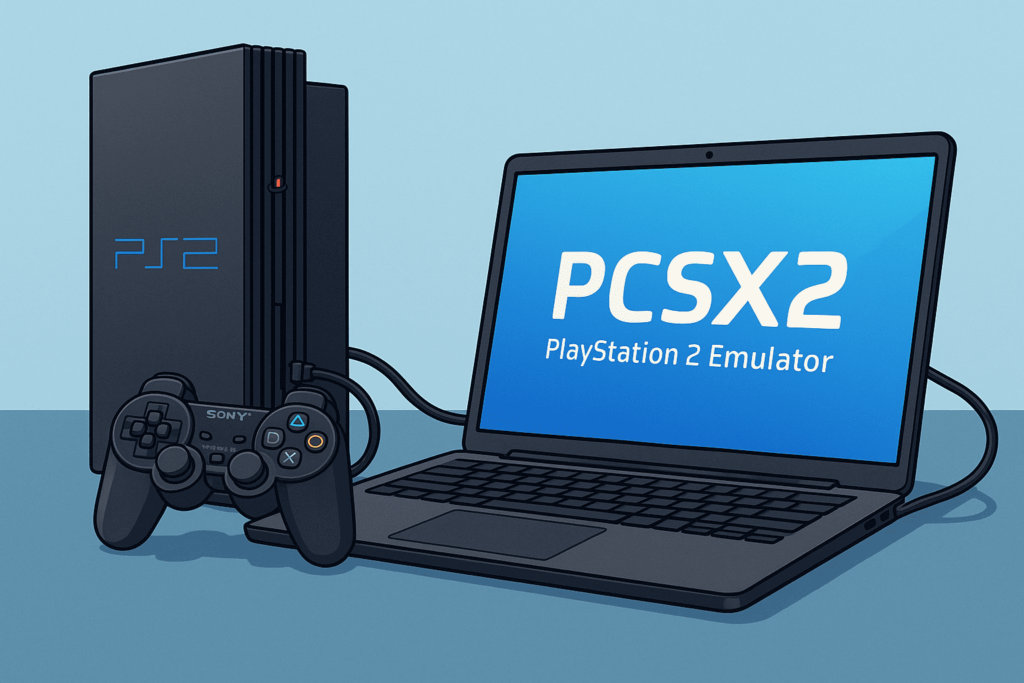
The PS2 BIOS is the core element of PlayStation 2 emulation. It serves as a bridge between the original console’s hardware and the emulator software that runs on a computer or mobile device. Without this essential file, the emulator cannot start, load games, or save progress correctly.In technical terms, the BIOS stands for Basic Input Output System. It instructs the emulator to behave exactly like the original PlayStation 2 console. When players use the correct PS2 BIOS file, they experience smoother gameplay, stable frame rates, and clear, synchronized sound. Choosing the best PS2 BIOS for the selected emulator helps deliver accurate performance and a real console-like experience.
Legal and Safe Use of PS2 BIOS
Many new users search for phrases such as ps2 bios download or bios ps2 files hoping for an easy shortcut. However, downloading BIOS files from unverified sources is unsafe and may violate copyright law. These files are owned by Sony and are not legally distributed online.
The only safe and legitimate way to obtain PS2 BIOS files is to extract them from a personally owned PlayStation 2 console. This process, called dumping the BIOS, guarantees that the user is working within legal boundaries. It also ensures that the file is genuine and compatible, avoiding the risks of malware or corrupted data.
Websites that provide tutorials explaining how to configure PS2 BIOS for PCSX2 responsibly play an important role in supporting ethical emulation. They teach users how to preserve the original console experience while staying compliant with intellectual-property laws.
Why Choosing the Right BIOS File Matters?
Every PlayStation 2 region uses a slightly different version of the BIOS. For example, NTSC-U (United States), PAL (Europe), and NTSC-J (Japan) each have unique technical configurations. Selecting the correct PS2 BIOS file ensures that games run at the proper frame rate, maintain synchronized audio, and allow memory cards to save data without errors.
Players who use the best PS2 BIOS for their chosen emulator often notice improved loading times and more stable gameplay. The right PS2 emulator BIOS produces an experience that closely resembles playing on the original console.
Legal and Safe Ways to Get PS2 BIOS:
Understanding the Legal Side of PS2 BIOS
Before setting up a PlayStation 2 emulator, it is essential to understand that the PS2 BIOS is copyrighted by Sony. This means it cannot be freely shared or downloaded from random websites. Many new users search for terms like safe PS2 BIOS download or legal PS2 BIOS hoping for a quick setup, but downloading BIOS files from third-party sites can expose a computer to malware and legal risks.
The only legitimate way to get PS2 BIOS is to extract it from a personally owned PlayStation 2 console. This method, often called dumping the BIOS, creates a personal backup of the system’s firmware, allowing it to be used with emulators such as PCSX2. By doing this, players preserve their own software and comply with intellectual property laws, which is the foundation of ethical emulation.
How to Dump PS2 BIOS Safely
The process of dumping PS2 BIOS from the console is straightforward when using trusted tools. Two of the most reliable utilities are Free McBoot and uLaunchELF, which work together to copy the BIOS data from the console’s memory to a USB drive.
Below is a simplified overview of how the process works:
- Prepare the Console: Install or load Free McBoot on the PlayStation 2.
- Launch the Tool: Use uLaunchELF or a similar PS2 BIOS extractor to access system files.
- Dump the BIOS: Save the BIOS data to a USB drive as a personal backup.
- Transfer to PC: Move the saved files to a computer and store them in a secure folder.
The saved file is often referred to as bios.bin, and it can then be configured in emulators like PCSX2. This process guarantees a clean, original PS2 BIOS file that is safe, legal, and compatible with multiple emulation setups.
Why Legal Extraction Is Important
Using a PS2 BIOS dumper or extractor from your own console ensures that the backup comes from original hardware. It protects against viruses and maintains the authenticity of the gaming experience. Furthermore, following this approach supports the principle of personal backup ownership, which is the legal and ethical boundary recognized in the emulation community.
On the other hand, downloading random BIOS files may result in corrupted configurations, security issues, or emulator crashes. It also violates the Sony PS2 BIOS copyright, which can lead to penalties or account restrictions in certain regions. Staying within legal boundaries builds trust with users and helps maintain the longevity of the emulator ecosystem.
Setting Up the BIOS in PCSX2
After dumping the BIOS, players can easily set it up within their emulator. In PCSX2 BIOS setup, the file is placed in the correct folder path, typically named /bios/ inside the emulator directory. The PS2 BIOS folder should only contain the legally obtained files.
When PCSX2 is launched for the first time, it will ask for the BIOS location. Selecting the correct file allows the emulator to start and function just like a real console. It is best practice to keep a copy of the dumped BIOS as a PS2 BIOS backup to avoid future loss or configuration errors.
Maintaining Safe Emulation Practices
Legal emulation is not only about compliance; it is also about respect for game developers and preservation of gaming history. Using tools like Free McBoot BIOS dump and uLaunchELF PS2 BIOS extraction demonstrates responsibility and supports the idea that technology can help preserve classic consoles for future generations.
When users understand how to safely obtain and configure PS2 BIOS for PCSX2, they contribute to a healthy and ethical gaming community. The legal way to get PS2 BIOS always starts with ownership of the console and a genuine interest in recreating the authentic PlayStation 2 experience.
🕹️ How to Set Up PS2 BIOS in PCSX2 (Step-by-Step)
Follow this simple, beginner-friendly guide to correctly configure your PS2 BIOS in the PCSX2 emulator. Each step ensures you achieve stable performance, smooth visuals, and the authentic PlayStation 2 experience.
Step 1: Locate or Create the BIOS Folder
When you install PCSX2, a default directory structure is created automatically. Inside that folder is a subdirectory named “bios” — this is where your PS2 BIOS files should be placed. If it doesn’t exist, create it manually within the emulator’s main folder.
C:\Program Files (x86)\PCSX2\bios
Step 2: Add the BIOS Files
After dumping your BIOS from the console, you’ll get one or more files (often with extensions like .bin or .rom). Copy all of them into the BIOS folder. Avoid mixing unrelated files — keep only verified BIOS files from your own console.
You can also include multiple regional BIOS files for flexibility:
- NTSC-U (USA)
- PAL (Europe)
- NTSC-J (Japan)
Step 3: Launch PCSX2 and Open BIOS Configuration
Open PCSX2 for the first time (or reset settings). A setup wizard will appear — select the BIOS Configuration tab. If the list is empty, double-check your BIOS folder path in the settings to ensure it points to the correct directory.
Step 4: Select the Correct BIOS Region
Choosing the right BIOS region ensures smooth gameplay and compatibility. Refer to the table below to identify which BIOS suits your region best:
| Region | BIOS Code Example | Recommended Use |
|---|---|---|
| NTSC-U (USA) | SCPH-70012 | Best for North American games |
| PAL (Europe) | SCPH-50004 | Best for European titles |
| NTSC-J (Japan) | SCPH-10000 | Best for Japanese releases |
Step 5: Apply and Save Configuration
Click Finish or Apply to save your BIOS settings. PCSX2 will now load the BIOS automatically at each startup. Restart PCSX2 — if you see the classic PlayStation 2 logo, your BIOS setup is successful.
Step 6: Optimize BIOS Settings for Best Performance
While the BIOS doesn’t affect frame rates or graphics directly, correct setup ensures stable performance. Keep most settings at default and disable unnecessary patches. Advanced users can back up the BIOS folder for quick recovery after updates.
Step 7: Troubleshooting Common Issues
If PCSX2 fails to detect or load the BIOS, ensure that the folder path is correct and files are complete. Avoid downloading replacements online — re-dump your BIOS if needed.
- Recheck the BIOS folder for missing files.
- Confirm the path inside PCSX2 matches your directory.
- Re-dump if files are corrupted or incomplete.
- Never use BIOS files from unverified websites.
Understanding BIOS Versions and Regions (SCPH Codes Explained)
Why BIOS Versions Matter
Each PS2 BIOS version represents a specific hardware update or regional release of the PlayStation 2 system. Sony assigned an identification code known as an SCPH code to every console model, which also defined its BIOS version. These codes determine region, language, voltage settings, and even how saved data is handled.
Understanding these codes is essential because different emulators rely on matching the correct BIOS region to ensure full compatibility. For example, a North American game might not perform correctly when run with a Japanese BIOS due to timing and format differences.
When configured properly, the right BIOS version helps the PS2 emulator BIOS replicate authentic console behavior, guaranteeing better compatibility and smoother gameplay.
What Are SCPH Codes?
SCPH codes are identifiers assigned by Sony to each PS2 model. Every console variation—whether it was released in Japan, North America, or Europe—came with its own BIOS revision. These numbers usually appear on the back of the console or in its firmware name.
Below is a simplified PS2 BIOS list of common SCPH codes and their corresponding regions:
| Region | SCPH Code Example | BIOS Version Name | Notes |
| Japan (NTSC-J) | SCPH-10000, SCPH-30000 | v1.0 – v2.0 | Early BIOS releases, used for testing and original launch models |
| USA (NTSC-U) | SCPH-39001, SCPH-70012 | v1.6 – v2.2 | Most stable for PCSX2, widely used for emulation |
| Europe (PAL) | SCPH-50004, SCPH-90004 | v1.9 – v2.3 | Includes language support for European regions |
| Asia (Other) | SCPH-90006 | v2.0 – v2.3 | Compatible with many international titles |
BIOS Compatibility and Performance
Not every PS2 BIOS file performs the same. Some older BIOS versions can cause minor compatibility issues or missing sound effects. For example, early Japanese BIOS files may not recognize certain game formats, while later U.S. releases offer more stable memory-card handling and system performance.
The best PS2 BIOS for most users tends to be from later NTSC-U models, such as the SCPH-70012 version. This file provides excellent stability in PCSX2 BIOS setup and smooth compatibility across hundreds of titles.
Still, collectors and enthusiasts sometimes keep multiple BIOS regions for research and comparison. Having different PS2 BIOS versions allows them to test games from various markets and observe localization or performance differences.
Understanding Region Lock and Game Behavior
PlayStation 2 titles were released in region-locked formats, which means that a game designed for a PAL system might not run perfectly on an NTSC-U BIOS. The mismatch can lead to slower frame rates, incorrect screen sizes, or audio delays.
By matching each game with the correct PS2 BIOS region, players ensure smoother performance, faster loading, and consistent visuals. Emulators such as PCSX2 allow users to switch between BIOS regions easily, offering flexibility for players who own international game collections.
Tips for Choosing the Best PS2 BIOS
- Use your own console’s BIOS. Always dump the BIOS from your hardware to stay legal and ensure accuracy.
- Keep multiple versions. Store a few different SCPH codes to test game performance across regions.
- Stay updated. PCSX2 and other emulators evolve frequently, so newer releases often work best with modern BIOS files.
- Label clearly. Rename each file with its region and SCPH code to avoid mix-ups when testing games.
Selecting the right PlayStation 2 BIOS region is not just about game compatibility; it also enhances the overall emulation quality by replicating the original environment of the console.
PS2 BIOS File Structure Explained
Understanding the PS2 BIOS Structure
The PS2 BIOS structure is made up of several files that together replicate the system’s original firmware. When a user performs a PS2 BIOS dump, the result is not just one file but a collection of system components that work together to make the emulator function like a real PlayStation 2.
Each file in the BIOS serves a specific role. Some handle startup routines, while others manage data communication or region settings. Knowing what each component does helps users understand how emulators like PCSX2 interpret and use these files to achieve accurate performance.
The Main Components of a PS2 BIOS
A standard PS2 BIOS dump usually contains multiple files. The most important ones are listed below with their functions explained.
| File Name | Description |
| ROM1 | Contains initialization data and system instructions that run during the console’s early boot process. |
| ROM2 | Works alongside ROM1 and includes additional configuration data used by later PS2 models. |
| EROM | Holds essential information related to DVD and CD decryption, as well as regional authentication. |
| SCPHXXXX.BIN | The main BIOS binary file that acts as the system’s core firmware. “XXXX” represents the console’s SCPH model number. |
| NVM / EEPROM | Contains saved console settings such as date, language, and video preferences. |
| MC Folder | Refers to the memory card structure that helps manage save files and emulation states. |
Together, these files make up the complete PS2 BIOS components package. Emulators need all of them to function properly, even though the main .bin file does most of the work.
How BIOS Components Work in Emulation
When a PlayStation 2 emulator starts, it reads these files in a specific order. The process begins with ROM1 and ROM2, which prepare the environment by simulating the internal hardware instructions. Next, the EROM file validates the disc format and checks regional information. Once these checks are complete, the main BIOS binary takes over, launching the familiar PS2 startup animation.
This layered process ensures that every PS2 BIOS configuration behaves exactly as it did on the original hardware. Missing or mismatched files can cause boot errors, slow performance, or emulator crashes. Therefore, it’s important to verify the PS2 BIOS folder contents after performing a BIOS dump.
Folder Organization and File Placement
When storing PS2 BIOS ROM files, organization is crucial. Keeping all BIOS data inside a single folder named “bios” helps the emulator locate them easily.
Inside this folder, users should include the complete PS2 BIOS dump contents, which normally consist of:
- ROM1
- ROM2
- EROM
- SCPHxxxx.bin (main BIOS)
- NVM file (if available)
Avoid renaming or deleting these files, as their default names help the emulator identify them automatically. Having incomplete PS2 BIOS system files can prevent games from loading or cause configuration errors.
Advanced Details for Enthusiasts
For advanced users, understanding how BIOS memory is structured can help with troubleshooting or customization.
The PlayStation 2 BIOS uses specific address spaces for ROM1, ROM2, and EROM to communicate with the I/O processor. These memory maps tell the emulator where to find each instruction, ensuring accurate timing and performance.
Enthusiasts who analyze PS2 BIOS data can study how each firmware version handles boot sequences, disc checks, and error reporting. This research helps improve emulator accuracy over time and contributes to preservation efforts within the retro gaming community.
Advanced Tips for Power Users
Getting the Most Out of PS2 Emulation
After setting up the BIOS and configuring the basic settings, experienced users can take emulation to the next level by fine-tuning PCSX2 performance settings. These advanced adjustments help maximize system performance, reduce lag, and enhance graphics quality without compromising game stability.
While the emulator runs smoothly on default configurations, a few expert-level PS2 BIOS optimization techniques can make a noticeable difference. Understanding how to balance speed and accuracy allows users to experience the full potential of PS2 emulation.
BIOS and Emulator Synchronization
The BIOS and emulator must work together in harmony to achieve smooth performance. When selecting the best PS2 BIOS settings, users should ensure the BIOS region matches the game’s format (NTSC or PAL). Mismatched regions can lead to frame-rate inconsistencies or sound desynchronization.
PCSX2 also provides a PS2 BIOS compatibility mode, which ensures that older BIOS versions remain functional with newer emulator builds. Enabling this option improves reliability for games that rely on specific timing or hardware responses.
Optimize PS2 Emulator Speed
To improve PS2 emulator performance, power users can explore the PCSX2 advanced settings menu. The most impactful adjustments usually include:
- Enable Multi-Threaded Mode: Activates multiple CPU cores to improve frame rates and reduce stuttering.
- Adjust EE/IOP Settings: Tweaking the Emotion Engine (EE) and I/O Processor (IOP) values can stabilize demanding games.
- Use VU (Vector Unit) Speed Controls: Allows finer control over rendering operations for smoother animation and fewer frame skips.
- Limit Frame Rate: Setting the correct frame limiter prevents over-speeding or slow-motion issues.
These steps, combined with the right PCSX2 CPU settings, ensure that each game runs efficiently, matching the original console experience as closely as possible.
Graphics and Hardware Configuration
In PCSX2 hardware settings, users can boost visual quality by increasing internal resolution, texture filtering, and anti-aliasing. However, these features are resource-intensive, and it’s important to balance visual improvements with performance stability.
For mid-range systems, it’s recommended to use 2x or 3x native resolution. High-end systems can push to 4x or 6x for sharper details without frame drops. Avoid overusing post-processing effects, as excessive enhancements may cause emulator instability.
The ps2 emulator configuration window also includes options for aspect ratio, vsync, and display synchronization. Fine-tuning these elements helps prevent screen tearing and improves overall responsiveness.
BIOS Tweaks and Performance Tips
Although most speed improvements come from emulator options, the BIOS itself can influence startup and compatibility. Some PS2 BIOS tweaks that advanced users apply include:
- Disabling Logo Splash: Skipping the PS2 startup animation saves time during game loading.
- Selecting a Faster Region BIOS: Certain SCPH models boot quicker than others.
- Maintaining a Clean BIOS Folder: Keeping only active BIOS files reduces confusion and ensures smoother emulator initialization.
Combined with PCSX2 speed hacks, these techniques can cut down on boot times and prevent frame-rate drops during high-action scenes.
Ensuring Stability and Compatibility
The goal of optimization is not only to enhance visuals or speed but also to maintain stability. Experimenting with too many hacks or incompatible options may cause games to crash or behave unpredictably.
To maintain smooth gameplay, remember these emulator stability tips:
- Always back up configuration files before making changes.
- Test one setting at a time to identify which adjustments improve performance.
- Keep BIOS and emulator versions updated to ensure ongoing compatibility.
- Avoid using third-party patches that may interfere with PCSX2 system performance.
Proper configuration ensures the best PS2 BIOS settings work hand-in-hand with advanced emulator features to deliver the most authentic and responsive experience possible.
⚙️ Troubleshooting & FAQs
Even after successful PS2 BIOS setup, users may face issues such as “PS2 BIOS not found” or “PCSX2 BIOS failed to load.” These guides explain common causes and simple solutions to restore your emulator’s performance quickly.
1. PS2 BIOS Not Found
Cause: The emulator cannot find the BIOS folder or files due to an incorrect path configuration.
Fix:
- Open PCSX2 → Config → BIOS/Plugin Selector.
- Verify the PS2 BIOS folder path matches your BIOS storage location.
- Use the Browse option to manually select the folder.
- Ensure valid files exist such as SCPH-XXXX.bin.
- Extract BIOS files — avoid ZIP or RAR archives.
2. PS2 BIOS Failed to Load
Cause: The BIOS file may be damaged or incomplete.
Fix:
- Re-dump BIOS using Free McBoot or uLaunchELF.
- Replace corrupted files with a clean BIOS dump.
- Avoid renaming ROM1, ROM2, or EROM files.
- Always use a verified BIOS dump from your own console.
3. PCSX2 BIOS Error During Startup
Cause: BIOS region mismatch (e.g., PAL BIOS with NTSC game).
Fix:
- Open Config → BIOS Settings and verify correct region (NTSC or PAL).
- Switch to another version such as SCPH-70012 (NTSC-U).
- Restart PCSX2 to apply new settings.
4. PS2 BIOS Folder Not Detected
Cause: BIOS folder moved, renamed, or lacks permissions.
Fix:
- Place the BIOS folder inside the main PCSX2 directory.
- Rename folder to bios (all lowercase).
- Grant file permissions and run PCSX2 as Administrator.
5. PS2 BIOS File Corrupted
Cause: File corruption due to storage or transfer issues.
Fix:
- Delete and re-extract BIOS from your PS2 console.
- Store BIOS safely and avoid compression or editing.
- Maintain a backup of your original dump.
6. Emulator Crashes or Black Screen
Cause: Incompatible BIOS setup or incorrect speed hacks.
Fix:
- Disable speed hacks under System → Speedhacks.
- Revert BIOS settings to default.
- Check BIOS file path and integrity.
- Reset PCSX2 configuration (PCSX2.ini) if needed.
7. BIOS Missing Components
Cause: Missing key files like ROM1, ROM2, or EROM.
Fix:
- Ensure BIOS folder includes ROM1, ROM2, EROM, and .BIN files.
- Re-dump BIOS if any files are missing.
- Don’t mix files from different regions or versions.
Frequently Asked Questions (FAQ)
Find clear answers to common PS2 BIOS and PCSX2 setup questions. These FAQs will help you configure, troubleshoot, and optimize your emulator safely and effectively.
Q1. Why is my PCSX2 showing “BIOS not found” even though I added the files?
Check that the BIOS path inside PCSX2 matches the folder where your BIOS files are stored. The emulator doesn’t auto-detect folders — you must select the correct directory manually.
Q2. Can I use BIOS files downloaded from the internet?
No. Downloading BIOS files from third-party websites is both illegal and unsafe. Always dump the BIOS directly from your own PlayStation 2 console to remain compliant and virus-free.
Q3. What is the best BIOS for PCSX2?
The SCPH-70012 (NTSC-U) BIOS is among the most stable and widely compatible versions. However, it’s best to use the BIOS that matches your console’s original region.
Q4. My BIOS is detected but games won’t load. Why?
This can happen if the game file is corrupted or if there’s a region mismatch between your BIOS and the game. Always pair NTSC-U BIOS with NTSC games and PAL BIOS with PAL games.
Q5. How can I fix the “BIOS failed to load” error quickly?
Re-dump the BIOS from your console and confirm all components — ROM1, ROM2, EROM, and .BIN — are included. Then reconfigure the BIOS path in PCSX2 before restarting the emulator.
Final Thoughts
experience through emulation. With the right configuration, legal methods, and optimized settings, anyone can relive classic PS2 games safely and smoothly.Start your setup today using your own BIOS files and trusted emulators like PCSX2 or AetherSX2 to bring your favorite titles back to life, the right way.